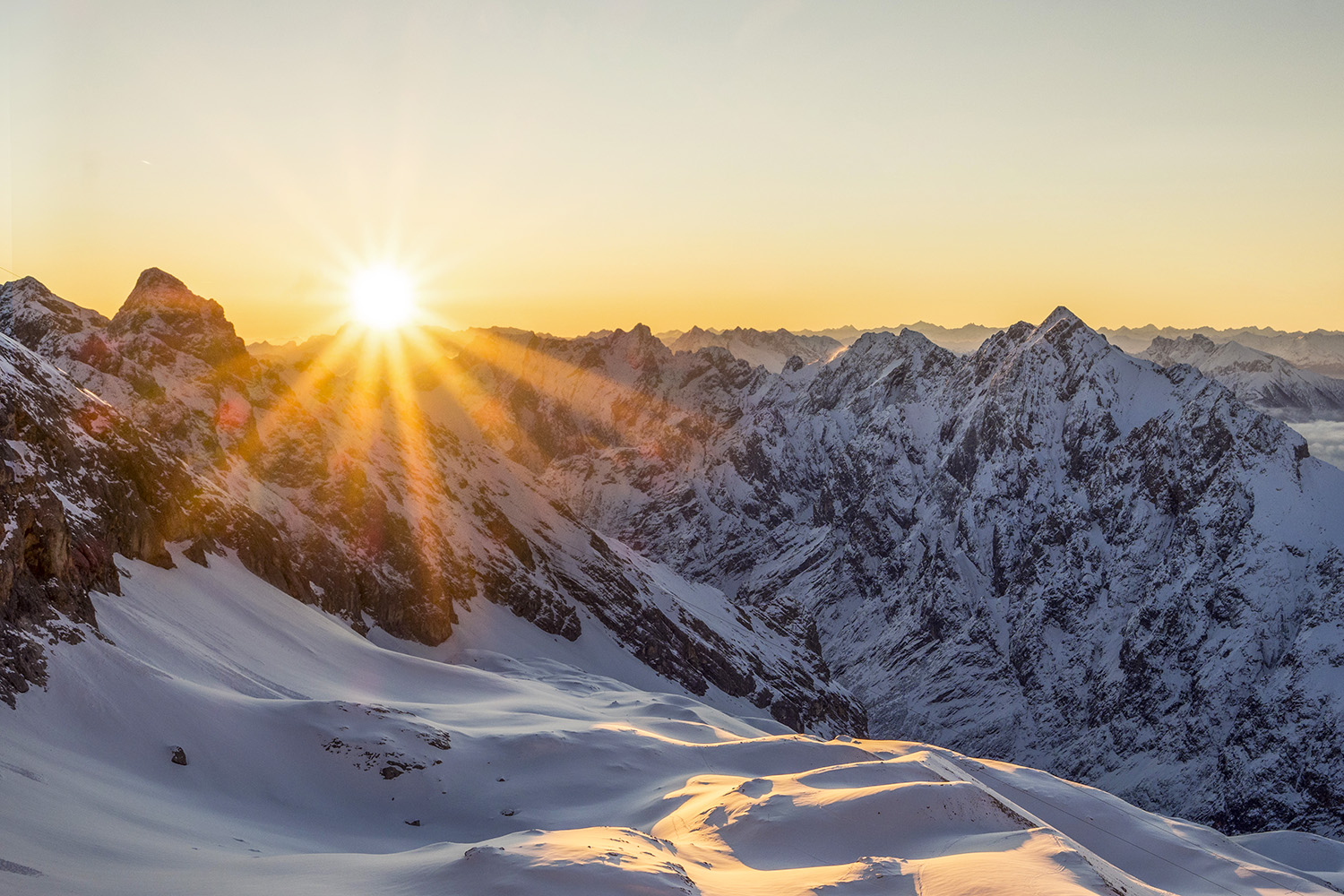
Zugspitze, Germany. Credits: Benjamin Jacobs, TUM (2025).
Long-term monitoring of active layer thickness confirms global permafrost degradation
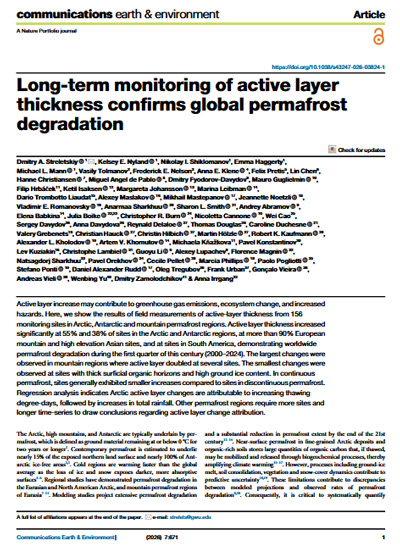
A new study published in Communications Earth & Environment provides one of the most comprehensive assessments to date of changes in the active layer which is the soil layer that thaws seasonally above permafrost.
Led by GTN-P Chair Dmitry Streletskiy and involving numerous members of the GTN-P community, an international team analyzed long-term measurements from 156 monitoring sites across the Arctic, Antarctic and high-mountain regions, covering 2000–2024. By bringing together observations from the CALM and GTN-P networks, the study demonstrates the value of coordinated, long-term monitoring efforts and the strong contribution of the permafrost monitoring community.
The results show a clear trend towards a thicker active layer, with the strongest increases observed in European mountain regions, where more than 90% of sites showed significant increases of around 10 cm per year. The findings provide important evidence of ongoing permafrost change while highlighting the critical role of long-term observation networks such as CALM and GTN-P in documenting and understanding these changes.
Citation:
Streletskiy DA, Nyland KE, Shiklomanov NI et al. (2026): Long-term monitoring of active layer thickness confirms global permafrost degradation. Commun Earth Environ 7, 671. DOI: 10.1038/s43247-026-03824-1